$20.00
We will hold your cart for 15:00.
Ask ten people in a shop what the flats on a socket are for and you'll get ten different answers. But the 6-point versus 12-point question comes up every single day — at the parts counter, in the forum threads, and on the job when a corner of a fastener suddenly looks a lot rounder than it did five minutes ago. This guide breaks down exactly how each socket design grips a fastener, where 12-point tools genuinely earn their place, and why the fastest upgrade to your toolbox might not be a fancier ratchet — it might be a no-skip socket set.
A socket doesn't grab a fastener the way a chuck grabs a drill bit. It transfers torque through flat contact surfaces pressed against the flats of the hex. The number of points determines how those flats are arranged:
That geometry trade-off is the entire debate in one paragraph. Six points grip harder. Twelve points fit where your hand can't swing.
If you're breaking loose a corroded axle nut, an impact-driven suspension bolt, or anything that's been sitting through a few Michigan winters, reach for a 6-point socket. Because the load is carried on the flats with a longer contact surface, more torque goes into turning the bolt and less into deforming its corners. Rounded fasteners are almost always a story that starts with a 12-point socket and a breaker bar.
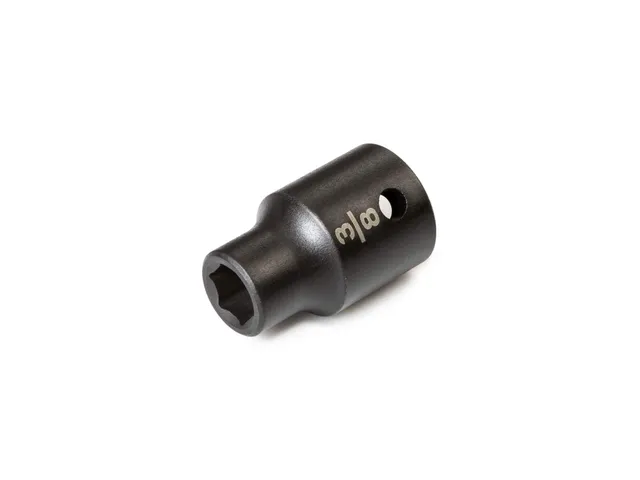
For impact work, the choice is even more clear-cut. Impact sockets like the TEKTON 1/2" Drive x 3/8" Shallow 6-Point Impact Socket are built from chrome-moly steel with black oxide finishes and thick 6-point walls specifically to survive hammering from an impact wrench. A polished chrome 12-point hand socket has no business on an impact gun — it will crack, and it can throw shrapnel.
12-point tools aren't worse — they're specialized. Three situations justify them:
The rule of thumb professionals use: 6-point sockets for sockets, 12-point where access demands it or the fastener demands it. The failure mode of a 12-point socket on a high-torque hex bolt is rounding. The failure mode of a 6-point socket in a space too tight to swing is... nothing, because it simply doesn't fit.
Here's where most budget socket sets quietly fail you. Many entry-level sets "skip" sizes — you'll get 10mm, 12mm, 14mm instead of a full 10 through 19mm metric run. It looks like complete coverage on the box, and then the day you need an 11mm for a hose clamp or a 13mm for a battery hold-down, the set lets you down and the adjustable wrench comes out. Adjustable wrenches are great problem-solvers, but they're a last resort on fasteners, not a substitute for the right socket.
A no-skip socket set includes every size in the range with zero gaps. Why does this matter so much?
When comparing sets, look past the piece count. A 40-piece set with skips can offer less real coverage than a no-skip 30-piece set. Check the size chart on the listing and make sure every size from smallest to largest is present — that's the whole game.
| Job | Best Choice | Why |
|---|---|---|
| Breaking loose rusted, high-torque bolts | 6-point socket + breaker bar | Maximum flat contact, no corner loading |
| Impact wrench work | 6-point impact socket (Cr-Mo) | Tougher steel, thicker walls, safer under hammering |
| Tight engine bay, dash, or interior work | 12-point ratcheting wrench or 12-point socket | Engages every 30° for short swing arcs |
| Genuine 12-point fasteners | 12-point socket only | The fastener geometry requires it |
| Everyday general repair | No-skip socket set, 6-point | Full size coverage means always the exact fit |
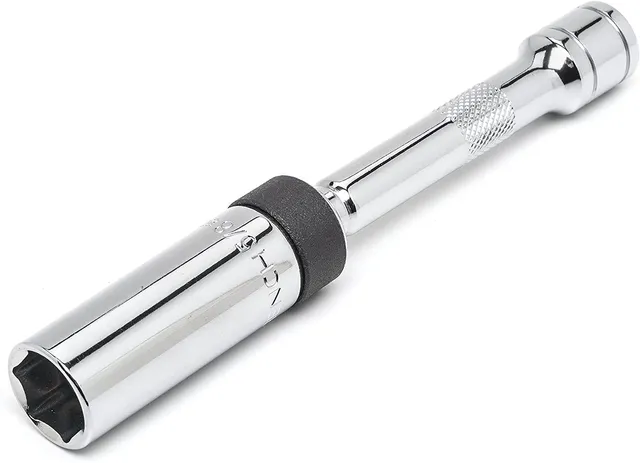
The 6-point principle extends to specialty tools, too. Spark plug sockets, for example, benefit from 6-point engagement on a fragile, often corrosion-seized hex — and the best ones add a magnetic insert and swivel to reach plugs buried under coil packs. The GEARWRENCH 80546 5/8" Magnetic Swivel Spark Plug Socket combines a 6-point socket with a 6-inch swivel extension and magnet retention, which is exactly the configuration you want on deep-well plugs in transverse engines.
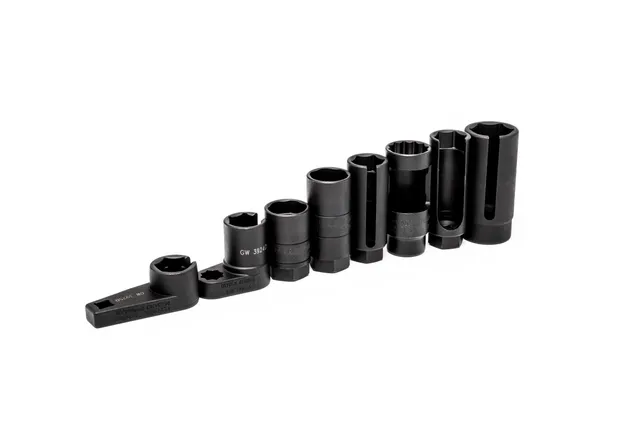
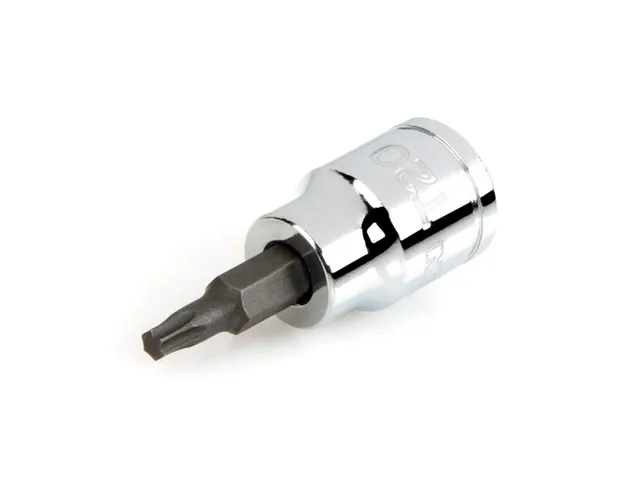
The same thinking applies to sensor sockets, which have cutouts for fragile wiring harnesses, and to bit sockets, where the 6-point surrounding wall protects both the bit and the fastener during torque work.
Here's the practical blueprint we recommend after years of watching what mechanics actually reach for:
The 6-point versus 12-point choice isn't about which tool is better — it's about matching contact geometry to the job. 6-point sockets put torque on flats and protect fastener corners, which is why they belong on your breaker bar and impact wrench. 12-point sockets and wrenches buy you access in tight spaces and handle genuine 12-point hardware, which is why every serious wrench set keeps a 12-point ratcheting box end in the mix.
But the upgrade that pays off every single day is simpler: a no-skip socket set with complete size runs, built on 6-point engagement, backed by the ability to buy any single replacement size. Round fewer bolts, never improvise with the wrong size again, and spend your money on sockets instead of do-overs.
Orders over $45.00 ship free. Otherwise, shipping is $8.00.
Hassle-free returns
SSL encrypted checkout
100% genuine products
Shop 930 tools from Tekton, GearWrench, and Crescent with clear specs, honest pricing, and support after the sale.
Email: support@drivenfastener.shop
Address: 1420 Rivet Avenue, Suite 7, Dayton, OH 45402, United States